Homebody: Better Renting
- 4.6
- Rating
- 50.00K
- Installs
- Free
- Price

 Analysis by App-foxy
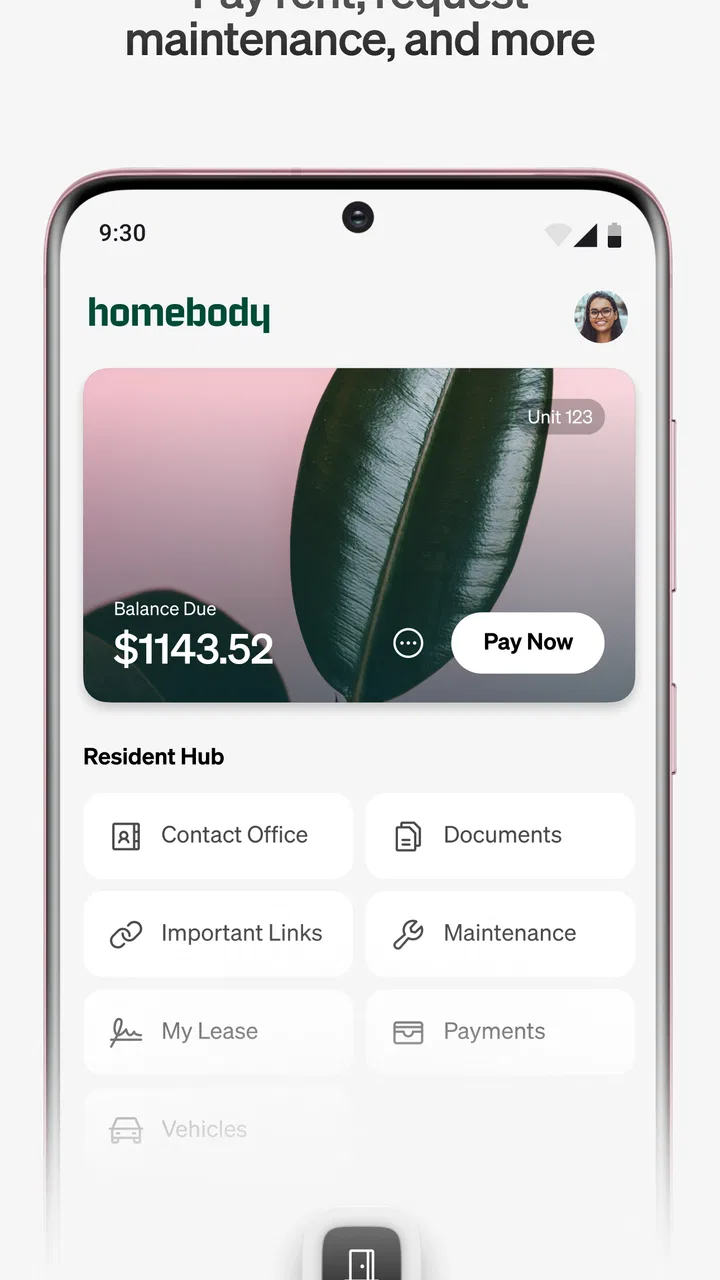
Renting is full of small jobs that are easy to forget until they become expensive: arranging insurance, keeping track of housing payments, and trying to make regular rent count toward a stronger financial profile. Homebody: Better Renting brings those concerns into one lifestyle app from Entrata, Inc. I found its appeal less in flashy design and more in the idea of reducing the number of separate housing tasks I need to remember.
The app is free, aimed at everyone, and sits in the lifestyle category rather than trying to be a full banking replacement. Its central promise is practical: help renters handle insurance, save money, and build credit through the rental experience. That makes it most interesting for people who want housing-related tools in one place, especially renters who are just beginning to manage these responsibilities on their own.
After spending time with it, my view is positive but measured. Homebody is best understood as a renter-focused companion, not an all-purpose personal finance app. It can make a fragmented routine feel more organized, but it still depends on how well its available services fit your rental situation and how consistently you use them.
You May Also Like

 AccuWeather: Weather Radar
AccuWeather Review: A Quick, Clear Forecast for Everyday Decisions
For everyday plans, the best forecast is the one you can understand quickly. AccuWeather makes rain timing, radar, and local conditions easy to act on, with a few trade-offs.

 Hill Climb Racing
Why Hill Climb Racing Still Turns Crashes Into One More Run
A tiny car, a bumpy hill and one more upgrade: Hill Climb Racing keeps resurfacing because its simple chaos makes every near-miss feel personal.

 AliExpress - Shopping App
AliExpress Makes Global Shopping Feel Personal, but Shoppers Bear the Risk
AliExpress turns a global marketplace into a pocket-sized discovery engine. Its reach is useful, its shopping loop compelling, and its trade-offs easy to miss.

 Lords Mobile: Kingdom Wars
Lords Mobile Is a Kingdom-Building Routine, Not a Quick Match
A case-by-case verdict on the building, battles, device demands, and social commitments that make Lords Mobile rewarding for some players and exhausting for others.

 PDF Scanner app - TapScanner
TapScanner Makes Paperwork Easier to Capture, Check, and Share
TapScanner makes scanning with a phone feel less like a rescue operation and more like a dependable step in getting work done. Its capture tools are useful, though not flawless.

 Block Blast!
 Shows How Much a Puzzle Game Can Leave Out
A quiet grid game shows why puzzle players increasingly value instant clarity, repeatable skill and low-pressure play—and where the genre still needs to catch up.
More From Our News Desk
View All News


How Homebody fits into a renter’s routine today
The first thing I noticed is that the app’s value depends on context. If I already have a reliable insurance provider, a separate savings system, and a clear way to manage rent-related financial activity, Homebody may feel like an optional extra. If those pieces are scattered across emails, banking apps, and landlord portals, bringing them closer together is much more useful.
A realistic example is moving into a new apartment while starting a first full-time job. I might be focused on deposits, furniture, utilities, and a new commute, while insurance is still sitting on my to-do list. At the same time, I may be trying to establish a credit history without taking on unnecessary debt. In that situation, a renter-specific app can act as a checklist and a central place to revisit housing-related financial tasks.
I would not use it as my only tool for budgeting. A general finance app is usually better for seeing every account, subscription, bill, and spending category together. Homebody has a narrower purpose, and that narrowness is actually its strength when the problem is specifically connected to renting.
The free price also lowers the barrier to trying it. There is no purchase decision before I can decide whether the workflow suits me. Still, “free” should not be confused with “every service is automatically suitable.” Insurance and credit-building decisions deserve careful attention to their terms, eligibility, and personal consequences before I rely on them.
Insurance is more useful when treated as a task, not a checkbox
Renters often delay insurance because it feels less urgent than paying the deposit or moving boxes. Homebody’s insurance focus makes that responsibility more visible inside the same housing context. I see the benefit in using it at the beginning of a lease, when I am already reviewing what the property requires and what protection I actually need.
My practical advice is to prepare the information you will need before starting: your address, lease details, and an honest idea of the belongings you want covered. That makes the process less frustrating than opening the app while searching through documents. I would also compare the resulting coverage with any existing policy rather than assuming the first convenient option is the best one.
This is one of the app’s less obvious strengths: it can help connect insurance with the moment when a renter is already thinking about housing obligations. The trade-off is that convenience can encourage rushed decisions. I would use Homebody to organize the task, then read the coverage details carefully before committing.
Saving and credit building require realistic expectations
The saving and credit-building angle is likely to attract renters who feel that their monthly housing payments do not help them demonstrate financial reliability. That is a meaningful problem, particularly for people with limited credit history. The app’s concept is appealing because rent is already one of the largest recurring payments in many households.
However, I would approach this feature with patience. Credit improvement is not something I would judge after a few days, and I would not treat it as a substitute for paying every bill on time, keeping debt manageable, and checking my credit information through appropriate channels. Homebody may support a broader plan, but it cannot make responsible financial habits unnecessary.
A useful workflow is to set a monthly reminder to review the app after rent has been handled. I would check whether the relevant activity appears as expected, keep my own payment records, and avoid assuming that an in-app status automatically means every credit-related outcome is guaranteed. That habit gives me a backup trail and prevents the app from becoming a black box.
The important trade-off is simplicity versus control. A dedicated renter app may make the process easier to follow than a collection of unrelated services, while a specialist financial service may offer more detailed explanations and monitoring. I would choose Homebody when reducing friction matters most, and a more specialized option when I need deep reporting or broader credit tools.
What the current version says about the product’s direction
The current version is 2.0.16, which suggests that the app has moved beyond an initial release and is being maintained as an ongoing product rather than a one-time experiment. It first appeared on October 9, 2023, so the version history represents a relatively young service developing around a focused renter problem.
I would be careful not to read a version number as proof that every part of the experience is mature. A newer build can improve reliability and navigation without solving the larger question of whether the available services match every lease, landlord arrangement, or financial situation. What matters to me is whether the current experience makes the core tasks clearer and more dependable.
For someone installing it now, the sensible approach is to treat the present release as the working version and evaluate it through a small, low-risk task first. I might begin by exploring the insurance area or reviewing the saving and credit-building explanation before changing anything important. That gives me a feel for clarity and usefulness without immediately restructuring my finances around the app.
What has changed, and what that means for existing users
Because Homebody has reached version 2.0.16, existing users are likely encountering a product that has evolved from its early form. The confirmed release history gives me confidence that the developer, Entrata, Inc, has continued working on the app. It does not, by itself, tell me that a particular screen or service has changed, so I would judge the update by practical results: fewer confusing steps, smoother movement between housing tasks, and clearer explanations when an action affects insurance, saving, or credit.
For an existing user, the most important change may be conceptual rather than visual. As the app develops, it becomes more valuable when it works as a repeatable monthly routine instead of something opened only during move-in. I would revisit it after major housing events, such as renewing a lease, changing address, or reviewing insurance needs, rather than expecting it to replace daily financial management.
There is also a useful distinction between discovery and confirmation. Homebody can help me discover renter-focused options and keep them in view. Confirmation still belongs to the relevant provider, lease documents, payment records, or credit information. Keeping those roles separate protects me from overestimating what an app dashboard can prove.
The app has an average rating of 4.4 from around 251 ratings, with 36 written reviews. That is a promising reception, but I would not treat it as a guarantee that every renter will have the same experience. Housing arrangements vary widely, and an app can feel excellent for someone whose rental setup aligns closely with its intended workflow while feeling limited to someone with unusual payment arrangements or multiple properties.
Its audience is also growing: Homebody has passed 10,000 installs. That gives the product a meaningful base of users without placing it in the same category as long-established mainstream finance platforms. I see that as a reason to try it with sensible expectations: it is established enough to explore, but specialized enough that personal fit matters more than popularity alone.
Where it can replace the usual alternatives
The usual alternative is a patchwork. Insurance may be handled through an insurer’s app, saving through a bank, rent through a landlord portal, and credit monitoring somewhere else. That arrangement can offer more depth, but it also creates more passwords, notifications, and places to check. Homebody’s advantage is the renter-centered connection between these tasks.
It can also be more approachable than opening a general finance app and trying to interpret which parts apply to renting. Someone who wants a focused starting point may prefer a service that speaks directly to housing responsibilities. I especially see value for new renters, people rebuilding their financial routines after a move, and anyone who wants a reminder that rent can be part of a larger financial plan.
On the other hand, I would choose separate specialist tools when I need comprehensive budgeting, investment tracking, detailed insurance comparisons, or advanced credit analysis. A landlord’s own portal may remain the authoritative place for lease balances and payment history. Homebody should complement those systems unless it clearly covers a task I previously managed elsewhere.
Small workflows that make the app more useful
One effective approach is to use Homebody at three points in the rental cycle. First, open it when moving in to organize insurance and understand the financial options connected with the lease. Second, revisit it after the first regular rent payment to make sure I understand what is being tracked and what records I should retain. Third, check it around renewal time, when coverage, address details, and monthly affordability may all need another look.
A second useful habit is keeping the app separate from impulse decisions. If it presents a convenient path to insurance or credit-related support, I would pause and compare the terms with my existing arrangements. The app is most helpful when it reduces forgotten tasks, not when it pressures me into accepting the first available choice.
A third insight is that renters with irregular arrangements should test the fit early. People who split rent among roommates, pay through unusual methods, move frequently, or manage more than one residence may need extra record-keeping outside the app. I would not wait until a deadline to discover that my situation does not map neatly onto the intended workflow.
Finally, I would keep notifications purposeful. If the app becomes another source of alerts that I ignore, its organizational advantage disappears. I prefer checking it at a planned time and using the information to take a specific action, such as reviewing insurance, confirming a saving goal, or filing a rent record.
Remaining gaps and the renters who should skip it
The biggest limitation is scope. Homebody focuses on making renting better, but that does not make it a complete household finance center. I would skip it if my main goal is detailed expense analysis across several banks, investment management, debt payoff planning, or a full view of family finances.
I would also be cautious if I expect the app to solve credit problems quickly. Building a stronger financial profile requires time and consistency, and the app should be one part of that effort rather than the entire strategy. Anyone dealing with serious debt, disputed records, or urgent financial hardship may be better served by a qualified adviser or a dedicated credit service with tools designed for those issues.
Another potential friction point is trust. Insurance and credit-related features involve sensitive decisions, so I need clear explanations before I feel comfortable relying on them. If a screen leaves me unsure about what is being offered, what I need to provide, or what result I should expect, I would stop and verify the details rather than continue simply because the process is convenient.
Renters who already have excellent systems may gain little. If my landlord portal is clear, my insurer handles everything smoothly, and my bank already gives me the saving and credit tools I need, adding Homebody could create duplication. In that case, the app would need to save noticeable time to justify another place to manage housing information.
There is also a difference between a renter and a property manager. Homebody is designed around the renter’s experience, so someone looking for property maintenance, tenant screening, lease administration, or landlord accounting should look elsewhere. That distinction sounds obvious, but it matters because the developer’s connection to housing software could otherwise create the wrong expectation.
Questions I would answer before installing
Is it suitable for a first-time renter? Yes, especially if the main challenge is understanding which housing-related financial tasks deserve attention. I would use it as a guided starting point, while still reading lease and insurance documents independently.
Can it replace a bank or budgeting app? I would not expect that. Its value is the renter-specific layer, whereas a bank or budgeting service usually provides a wider view of spending and accounts. Using both may make sense if Homebody handles housing tasks that the broader app ignores.
Should I use it if I already have renters insurance? I might still explore it, but I would compare rather than duplicate coverage automatically. The app is more useful when it improves organization or reveals a relevant option, not when it causes me to maintain overlapping policies.
Is it appropriate for younger users? The content rating is Everyone, so it is broadly accessible from an age-rating perspective. In practice, the useful audience is people who are renting or preparing to rent and can make informed decisions about insurance, saving, and credit-related services.
What should I watch as the product develops? I would look for clearer explanations, smoother repeat use after the initial setup, and better handling of different rental arrangements. Those improvements would matter more to me than cosmetic changes because the app’s success depends on trust and dependable housing workflows.
My recommendation after using it
Homebody: Better Renting is a focused lifestyle app with a sensible purpose. I like that it treats renting as more than a monthly payment and brings insurance, saving, and credit-building into the same conversation. The free entry point makes experimentation easy, and its current 2.0.16 release shows a product that has continued evolving since its launch.
My recommendation is strongest for renters who feel their housing responsibilities are scattered and want a simple place to begin. I would install it before or shortly after moving, use it to organize the important decisions, and then build a monthly review habit around the information that matters to me.
I would not recommend making it the sole authority for financial planning, insurance selection, or credit expectations. Keep lease records, payment confirmations, and policy details available, and compare specialist alternatives when the decision is important. With that balanced approach, Homebody can reduce mental clutter without pretending to replace every other tool.
For the right renter, its real benefit is not doing everything; it is making the housing-related things I might otherwise overlook easier to notice and act on. That is a modest promise, but a useful one, and it is enough to make the app worth trying for people who want a more organized rental routine.
FAQs for Homebody: Better Renting
01What is Homebody: Better Renting and how does it work?
Homebody: Better Renting is an app designed to simplify the rental process for both tenants and landlords. It offers features like property search, virtual tours, and direct communication with landlords. Users can apply for rentals, submit documents, and even pay rent through the app, making renting more convenient and efficient.
02Is Homebody: Better Renting available for both Android and iOS devices?
Yes, Homebody: Better Renting is available for download on both Android and iOS platforms. You can find it on the Google Play Store for Android devices and the Apple App Store for iOS devices. This ensures that users across different devices can access the app’s features seamlessly.
03What are the key features of Homebody: Better Renting?
Homebody offers a variety of features including advanced property search filters, virtual property tours, secure document submission, and integrated rent payment options. It also provides direct messaging between tenants and landlords, ensuring that communication is clear and efficient throughout the rental process.
04Are there any fees associated with using Homebody: Better Renting?
While downloading the app is free, certain features may incur fees. For example, some premium services like enhanced listing visibility for landlords or advanced analytics might require a subscription. It’s advisable to check the app's pricing section for detailed information regarding any potential costs.
05How secure is my personal information on Homebody: Better Renting?
Homebody prioritizes user security by employing encryption for all personal and financial data. The app adheres to strict privacy policies to ensure that user information is protected against unauthorized access. Regular updates are also provided to address any security vulnerabilities, keeping user data safe.
Pros
- User-friendly interface for easy navigation.
- Comprehensive rental property listings.
- Real-time updates on new listings.
- Integrated chat for direct landlord communication.
- Secure payment options within the app.
Cons
- Limited to certain geographic locations.
- Occasional app crashes reported by users.
- Requires stable internet for optimal use.
- Some features locked behind a paywall.
- No option for virtual property tours.

Homebody: Better Renting
Gallery